

What Do Hindus Practice, but Cannot Prove
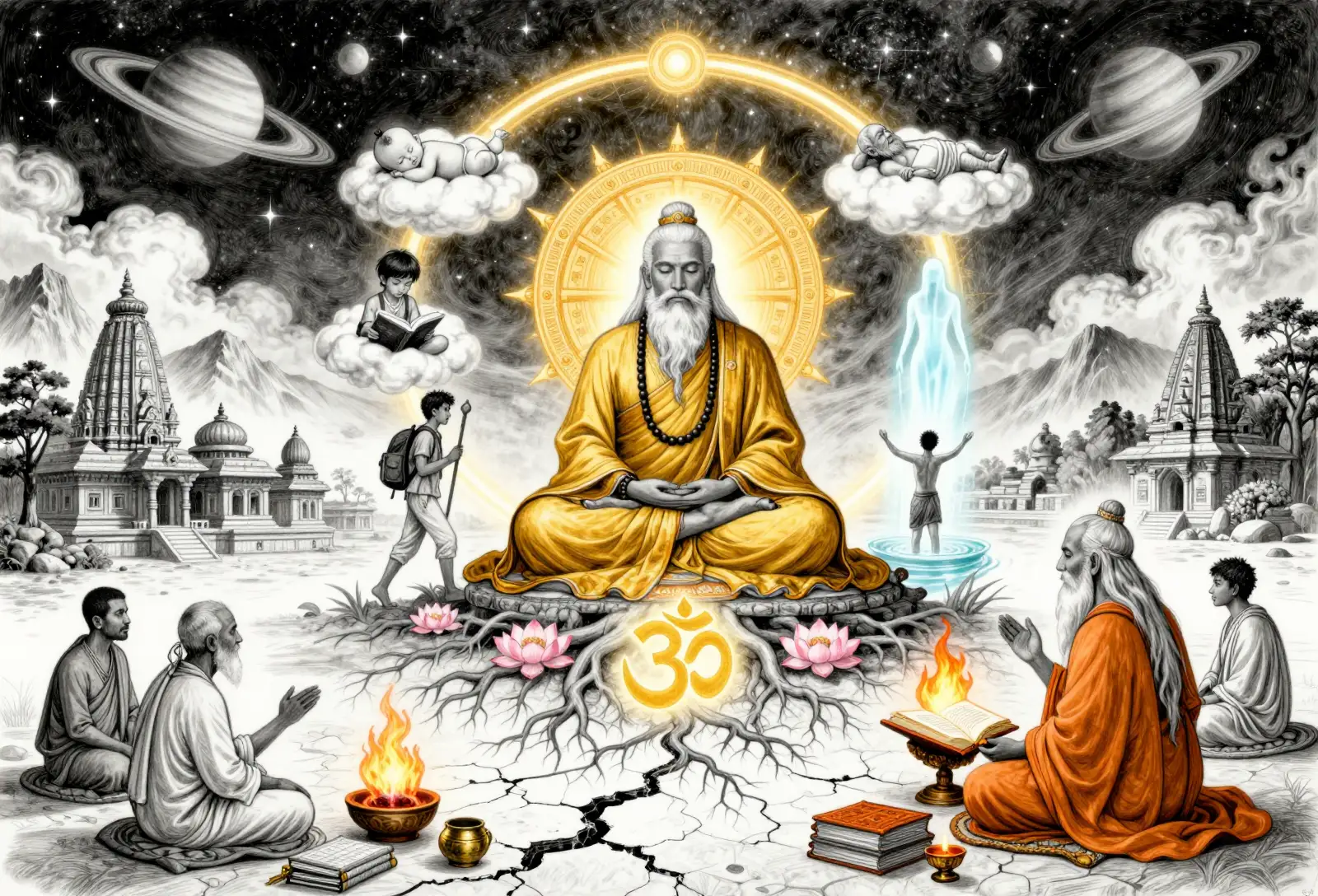
What do Hindus practice with deep śraddhā but cannot prove - karma phala siddhānta, reincarnation, mantra efficacy - and what is the right epistemic posture toward such axioms?
#indian knowledge systems
#karma
Conscious Hindus differentiate themselves from Muslims and Christians on the basis of belief. They say that while Islam and Christianity demand blind belief in their dogmas, Hindu dharma is not the same as the truth claims in its texts can be verified. Although the laboratory for testing many of the central axioms of Hindu dharma is an inner one, like yoga and meditation.
Even then there are certain practices and axioms in which Hindus have deep shraddha but which they cannot prove through rational and logical methods. One of the most central of these tenets is karma phala siddhanta, which almost every practicing Hindu agrees with but cannot prove. But is it entirely true? Is there proof for reincarnation? And are there other practices and fundamental axioms of Sanatana dharma which cannot be proved but which are central to the worldview and lifestyle of practicing Hindus? This big question deals with such practices and axioms.
Also See
blog
What the Bodha Logo Means - The Square, the Circle and the Eye of Wisdom
The Bodha logo decoded - how a simple geometric mark encodes the entire civilizational philosophy - the fractal structure of Hindu consciousness expressed in the relationship between square, circle, and the space they share.
blog
Siddhidātrī | Navadurgā - Part 9
Ninth and final in the Navadurgā series - the theology and iconography of Siddhidātrī Devī - the granter of all siddhis, the form who completes the Navarātrī cycle and whose worship is the culmination of the entire nine-day journey.
blog
Mahāgaurī | Navadurgā - Part 8
Eighth in the Navadurgā series - the theology and iconography of Mahāgaurī Devī - the luminous, peaceful form that follows Kālarātri, representing the purity and grace that emerge after the destruction of all that is false.
blog
Kālarātri | Navadurgā - Part 7
Seventh in the Navadurgā series - the theology and iconography of Kālarātri Devī - the most fearsome form, destroyer of darkness and ignorance, whose terrifying appearance conceals absolute protection for the devotee.
blog
Kātyāyanī | Navadurgā - Part 6
Sixth in the Navadurgā series - the theology and iconography of Kātyāyanī Devī - the fierce warrior form born to destroy the demon Mahiṣāsura, and the deity invoked for strength in the face of civilizational threat.
blog
Skandamātā | Navadurgā - Part 5
Fifth in the Navadurgā series - the theology and iconography of Skandamātā Devī - mother of Skanda (Kārttikeya), the form that holds together the energies of motherhood, courage, and cosmic order.
blog
Kūṣmāṇḍā | Navadurgā - Part 4
Fourth in the Navadurgā series - the theology and iconography of Kūṣmāṇḍā Devī - the form who created the universe with her smile, and who is propitiated for health, vitality, and the removal of darkness.
blog
Candraghaṇṭā | Navadurgā - Part 3
Third in the Navadurgā series - the theology and iconography of Candraghaṇṭā Devī - the warrior form whose crescent-bell emblem signals the transition from inner austerity to active, world-facing śakti.
blog
Brahmacāriṇī | Navadurgā - Part 2
Second in the Navadurgā series - the theology and iconography of Brahmacāriṇī Devī - the form of Durgā who represents austerity, renunciation, and the discipline through which the soul approaches the absolute.
blog
Śailaputrī | Navadurgā - Part 1
Opening the Navadurgā series - an introduction to the Navarātrī tradition followed by the theology and iconography of Śailaputrī Devī - daughter of the mountain, first of the nine forms, embodiment of primal śakti.
blog
The Difference Between Us - on One-life vs. Multiple-life Metaphysics
What actually separates the Hindu and Abrahamic worldviews at the deepest level is not ritual, theistic dimensions, or scripture but the one-life versus multiple-life metaphysical foundation - and the implications of that single difference ramify through everything.
blog
Ram Ayenge | Ayodhya Rama Temple Devotion and Hindu Awakening
A first-person account of the devotional groundswell preceding the 2024 Ayodhyā pratiṣṭhā - what a spontaneous civilizational awakening looks and feels like from the inside - and what it reveals about the living roots of Hindu consciousness.
blog
Recollection - The Glory of Śrī Kṛṣṇa Janmāṣṭamī
A pilgrimage to Mathurā, the city of Kṛṣṇa's birth - how a journey through the geography of the Kṛṣṇa legend becomes a direct encounter with the living presence of the divine in place, available to anyone who knows how to look.
blog
Turners of Time - How Hindu Festivals Rotate the Year
Holi and Hindu festivals as turners of time - how the festival calendar structures experience, transmits ecological wisdom, and keeps alive the felt relationship between human life and cosmic rhythm across generations.
blog
Chaṭh - a Living Tradition and Cultural Homecoming
Chaṭh as lived civilizational memory - a personal account of returning to Bihar for the festival, and what the survival of this demanding, water-centered rite reveals about the deep roots of Hindu devotional practice in the body and the land.
blog
Ahoi Aṣtamī – How Hindu Dharma Teaches Deep Ecology through Festivals
A festival most Hindus have forgotten exists - Ahoi Aṣṭamī as a window into how Hindu civilization transmits ecological and relational wisdom through the devotional practice of mothers, one week before Diwali.
blog
Towards Dharma-centric Polity - Lokmanya Tilak and the Universalization of Gaṇeśa Utsava
As dharma recedes from both personal life and public governance, what would a genuinely dharma-centric political order look like - and is it achievable within or only beyond the current Indian constitutional framework?
blog
Kṣetra, Śāstra, Utsava
On the axis connecting festival (utsava), sacred geography (kṣetra), and scripture (śāstra) - how Hindu festivals are to time what temples are to space - gradients of divine access that structure both the year and the land.
external-article
Case Against AOL - A Case of Malicious Prosecution
How Hindu spiritual organizations become targets of malicious prosecution — the Art of Living controversy as a case study in the left-missionary alliance that weaponizes courts and media against Hindu public figures.