

What Hindu Institution Will Generate All Others
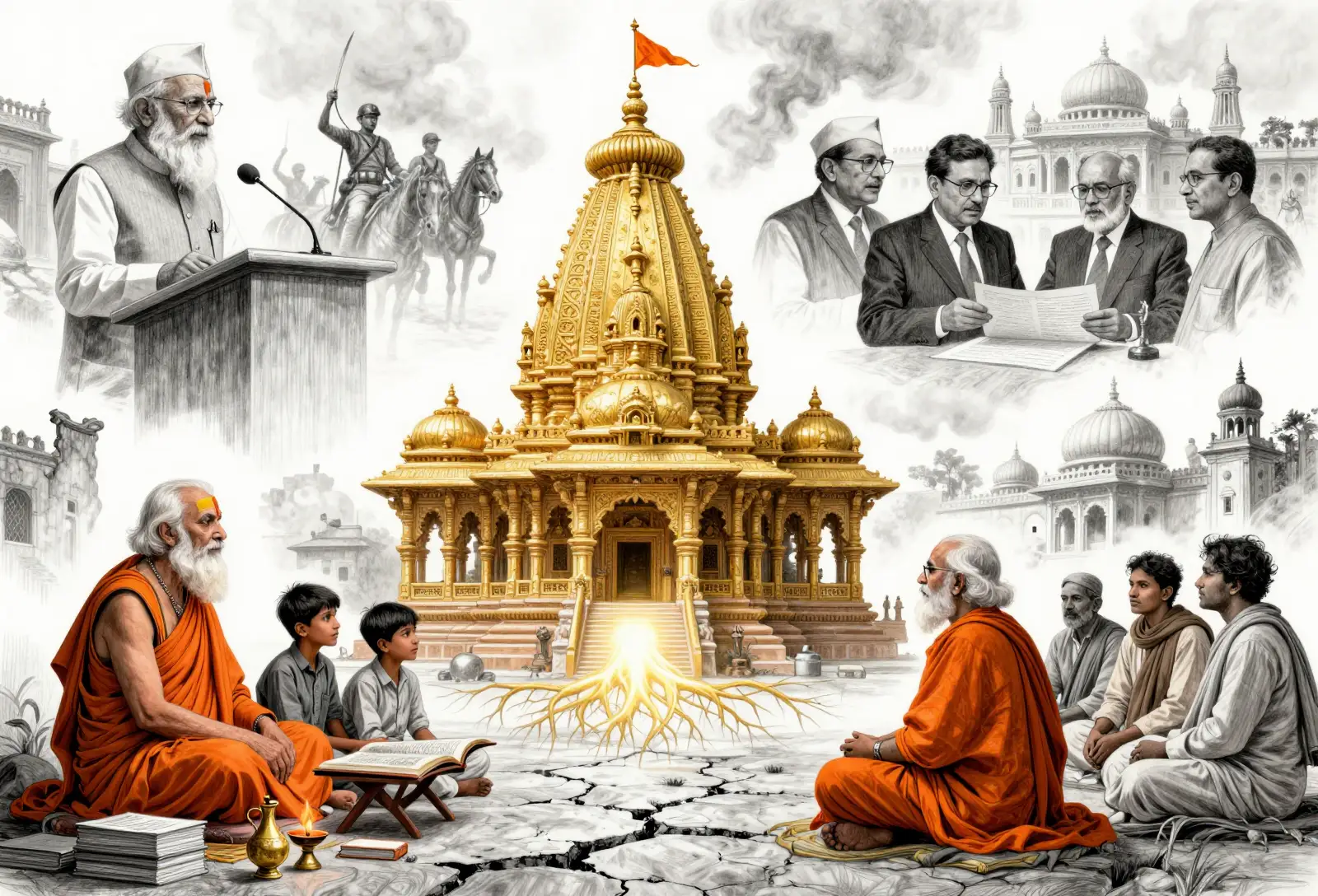
Which Hindu institution could regenerate civilizational life if everything else were lost: state, gurukula, temple, or something else?
#civilizational consciousness
#hindu institutions
In a situation where attacks on Hindu society are manifold, it is usual to think about the most important institution which Hindus have to save, in case of emergency where resources might not be enough to focus attention on saving all. This big question asks - what is that institution, by saving which all others will be saved, or in other words which is capable of generating all others even if they disappear for a while?
A political party which is favorable to Hindu causes and consequently a Hindu state is claimed as many to be that institution. State power is a strong force as it regulates so much more down the lane, but the fact that Islamic population holds so much power in India despite the state not being directly Islamic is something which belies this. Some say it is gurukula or the education system of ancient India which will ensure the guru-shishya parampara, and the continuation of India as a knowledge society. As Macaulay targeted India’s education system first and foremost, this is also a strong candidate for the institution that generates all others. However some say it is the Hindu temple which combines education, medicine, philanthropy and many other institutions and activities with it. The answer lies in the generative capacity of all these institutions and whether they can generate all others. This big question will list the answers of many such stakeholders.
Also See
blog
Bodha, the Pyramid of Priorities and the Nature of Hindu Organizations
Why Hindu organizational fragmentation is a feature, not a failure - Bodha's argument that Sanatana Dharma requires a diversity of independent organizations rather than monolithic unity, and what this means for civilizational strategy.
blog
Fractal Maṇḍala 2- the Macrohistoric Case for India's Civilizational Primacy
Part 2 - completing the Fractal Maṇḍala framework and its implications for how Hindu civilization organizes knowledge, culture, institution, and cosmos into a single coherent ontological structure.
external-article
Case Against AOL - A Case of Malicious Prosecution
How Hindu spiritual organizations become targets of malicious prosecution — the Art of Living controversy as a case study in the left-missionary alliance that weaponizes courts and media against Hindu public figures.
external-article
Dharmic Circuits - The Temple, The Grove and The Lake - Part 3
Sringeri as the model of a complete sacred ecology — where the temple, the forest, the river, and the Vedic institution are not separate entities but one inseparable living system.
external-article
Did Brahmins Monopolize Knowledge in Ancient India?
Dismantling the colonial claim that Brahmins monopolized knowledge in ancient India — the textual and archaeological evidence for broad-based literacy, cross-varna scholarship, and the structural openness of the gurukula tradition.
book
Hindu Studies in a Secular Academy
Reflection on the institutional framing of Hindu studies and the limits of secular academic categories.