

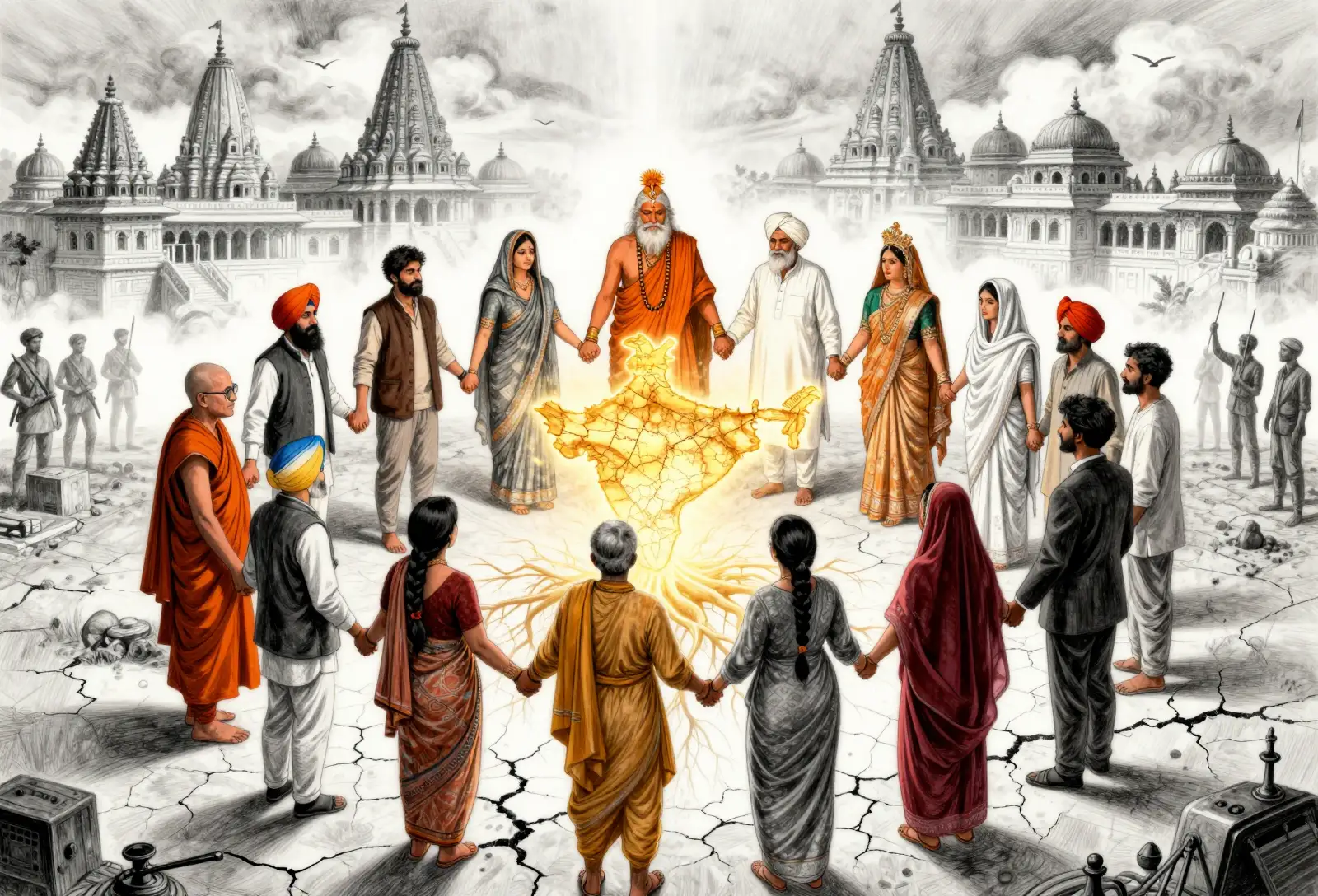
Is Hindu Unity Compatible With Indian Diversity
Can Hindus unite without flattening the diversity that defines India? A civilizational question about whether unity and diversity are complementary or in fundamental tension.
#civilizational consciousness
#hindu institutions
The most common refrain of those who are worried about the survival of Hindu civilization is that the Hindus are not united; that their society is divided into many groups on the lines of caste, community, language, region, and many other internal divisions - which turn into lethal faultlines when faced and exploited by an external enemy. This leads to many leaders and organizations concerned about Hindu society to call for elimination of all these differences, and creation of one identity only. But is that good for the future of Hindu society and Bharatavarsha?
Many wonder. This overarching Hindu unity might destroy or at least lessen the diversity that exists in India, some argue, and thus they also say that Hindu unity is not a worthy goal. Those who advocate Hindu unity say that they understand the concern of those who root for diversity, but that diversity will be destroyed in any case if it is overtaken by an external enemy force. The argument goes, so on and so forth. So is Hindu unity compatible with Indian diversity? Will unity lead to the destruction of all diversity? Can diversity survive standalone without uniting forces? Or is there a third path? This big question goes deep into all these questions and brings to you answers from many different stakeholders.
Also See
blog
Bodha, the Pyramid of Priorities and the Nature of Hindu Organizations
Why Hindu organizational fragmentation is a feature, not a failure - Bodha's argument that Sanatana Dharma requires a diversity of independent organizations rather than monolithic unity, and what this means for civilizational strategy.
external-article
How Old is the Hindu Temple?
The antiquity of the Hindu temple examined through textual, sculptural, and archaeological evidence — dismantling the Western academic claim that temple architecture was a Buddhist invention absorbed by Hinduism.
book
Dravidian and Pan-Indian Nature of Hinduism
Explores the Dravidian roots and pan-Indian cultural synthesis that shaped early Hindu traditions, rituals, and philosophical frameworks.
book
Vedic Roots Of Early Tamil Culture
Explores linguistic and cultural connections between early Vedic traditions and ancient Tamil Sangam literature, challenging rigid linguistic divides.