

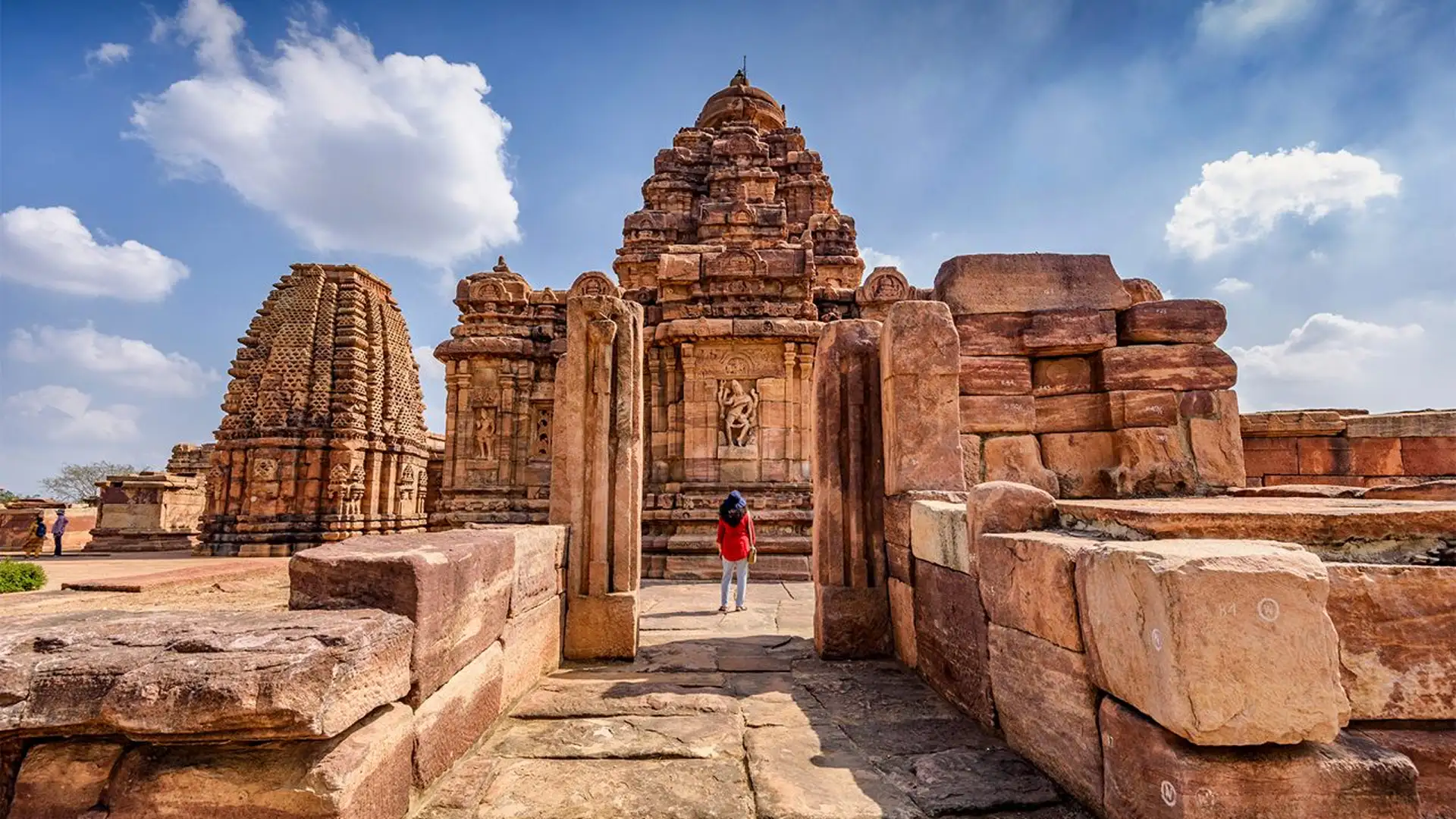
badami Chapter
Karnataka is a world on its own. And Badami is a good representative of the rich diversity of its cultural heritage.
Day 0
14 Aug 2026
Arrive at Badami and stay the night.
Day 1
15 Aug 2026 - Badami
Badami Cave Temples
Shri Vishnu Temple
Bhutanatha Group of Temples
Mallikarjuna Group of Temples
Archaeological Museum Badami
Badami Fort
Lower Shivalaya
Upper Shivalaya
Yellama Gudi
Dattatreya Temple
Day 2
16 Aug 2026 - Pattadakallu
Naganatha Temple Complex, Naganatha
Mahakoota Temple Complex
Pattadakallu Temple Complex
- Galganatha Temple
- Kadhasiddheshvara Temple
- Jambulingeshvara Temple
- Sangameshvara Temple
- Kashi Vishvanatha Temple
- Mallikarjuna Temple
- Virupaksha Temple
- Papanatha Temple
Day 3
17 Aug 2026 - Aihole
Durga Temple
Suryanarayana Temple
Shiva Temple
Ramalinga Temple Complex
Ravan Phadi
Huchiyappa Matha
Huchiyappa Gudi
Ambigergudi
Jyotirlinga Complex
Mallikarjuna Temple Complex
Day 4
18 Aug 2026
Shri Shakambhari Shakti Peetham, Banashankari
We take our flights and go home.
Temples
Use buttons to navigate, or swipe left/right.
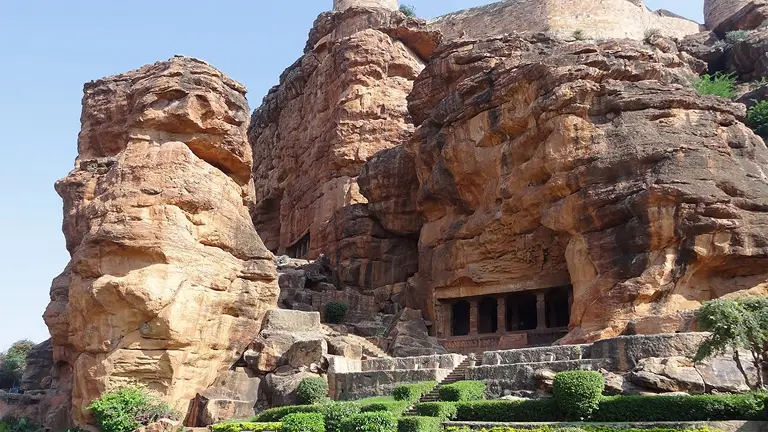
Badami Cave Temples
Badami Cave Temples are one of the earliest Hindu caves, dating to around the 6th century. It has mainly four elaborate cave temples, three Hindu, and one Jain. The Hindu caves sport some of the finest sculpture ever to be found in the history of Hindu sculpture. From the great Nataraja in his most spectacular form, to Shri Vishnu sitting on a Shesha, saving Bhudevi in his Varaha form, extending his third leg in his Trivikrama form, Shri Vishnu in Harihara form, Shri Vishnu in Narasimha form, Vishnu in standing form with Bhudevi and Sridevi etc. it presents the visitor with a vista rarely seen together at one place. Along with that there are absolutely wonderful sculptures of flying celestials like vidyadharas, load bearers depicted on capitals of columns, the bharavahakas and many amorous couples which gives the place a different character. The glowing pink and red sandstone just brings out the beauty of the place even more. Being hidden under limestone owing to its cave structures, the temples were never desecrated and thus present to us some of the finest unsullied, never desecrated examples of Hindu temple architecture.
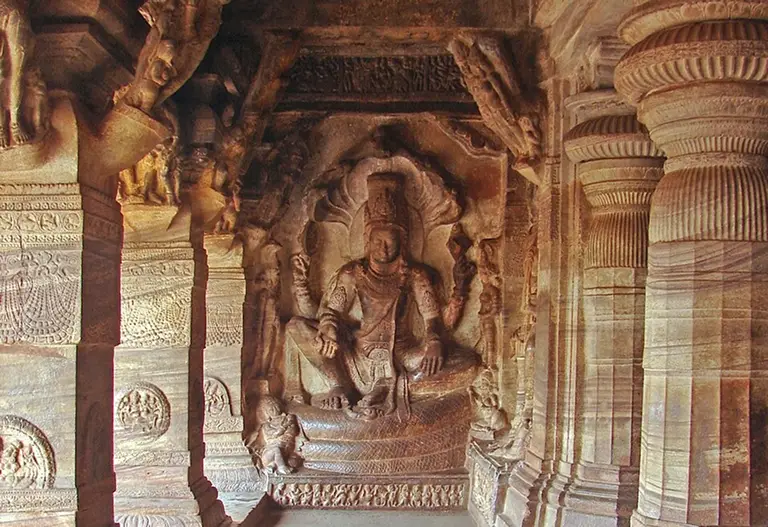
Shri Vishnu Temple
Badami Cave Temples are one of the earliest Hindu caves, dating to around the 6th century. It has mainly four elaborate cave temples, three Hindu, and one Jain. The Hindu caves sport some of the finest sculpture ever to be found in the history of Hindu sculpture. From the great Nataraja in his most spectacular form, to Shri Vishnu sitting on a Shesha, saving Bhudevi in his Varaha form, extending his third leg in his Trivikrama form, Shri Vishnu in Harihara form, Shri Vishnu in Narasimha form, Vishnu in standing form with Bhudevi and Sridevi etc. it presents the visitor with a vista rarely seen together at one place. Along with that there are absolutely wonderful sculptures of flying celestials like vidyadharas, load bearers depicted on capitals of columns, the bharavahakas and many amorous couples which gives the place a different character. The glowing pink and red sandstone just brings out the beauty of the place even more. Being hidden under limestone owing to its cave structures, the temples were never desecrated and thus present to us some of the finest unsullied, never desecrated examples of Hindu temple architecture.
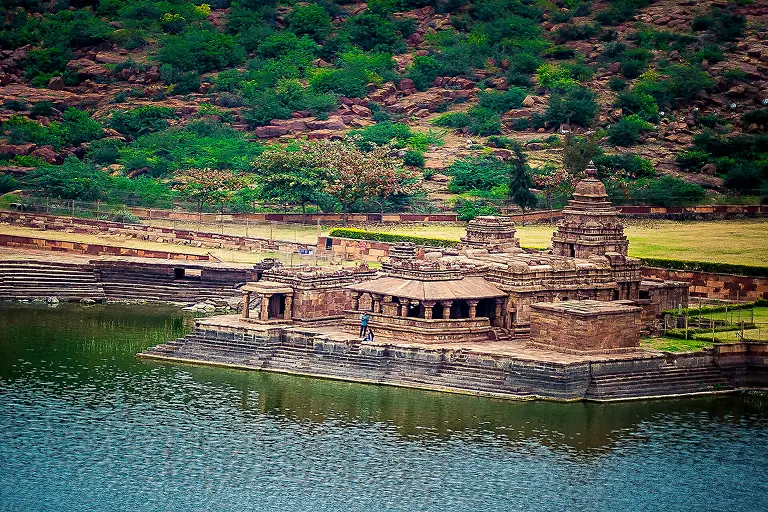
Bhutanatha Group of Temples
Arranged at the far end of the lake, the Bhutanatha group of temples were created by the Badami Chalukyas in the next stage of temple evolution, the same dynasty which carved the cave temples nearby. Created in the beginning of the 8th century this group represents typical Dravida architecture of those times. This group has one main temple with a Dravida tritala shikhara and a closed mandapa with a sloping roof. The mandapa is remarkable with four central pillars bearing the load, while the garbha-griha is dedicated to Lord Shiva. The other structures have deteriorated with time. The other group of temples are called the Mallikarjuna group of temples a little further away on the opposite side of the cave temples. Though they look similar but these temples were built two centuries after the Bhutanatha group, and was made by another completely different dynasty called the Kalyani Chalukya dynasty in 11th and 12th centuries. It contains five main temples having a phamsana nagara shikhara. The main temple has an open and a closed mandapa. Earlier dedicated to Shri Vishnu now it is a Shiva temple. These temples display Hindu temple architecture in evolution.
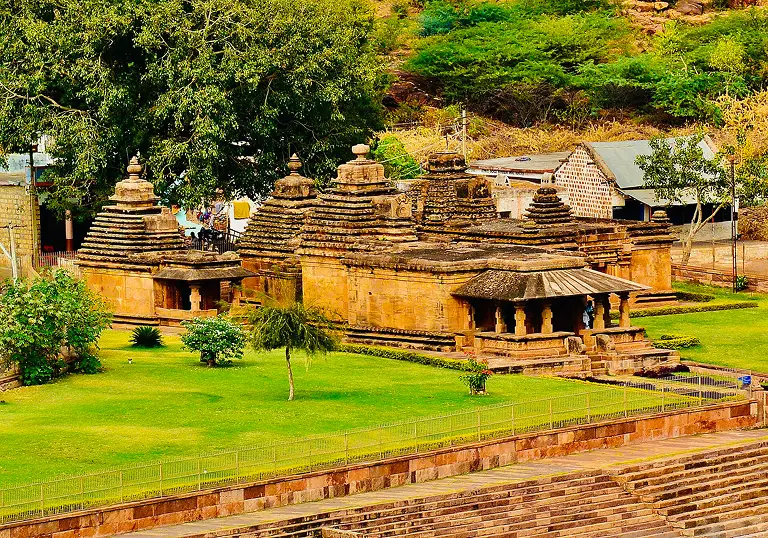
Mallikarjun Group of Temples
The Mallikarjuna group of temples a little further away from the Badami cave temples, on the opposite side of the cave temples. Though they look similar but these temples were built two centuries after the Bhutanatha group, and was made by another completely different dynasty called the Kalyani Chalukya dynasty in 11th and 12th centuries. It contains five main temples having a phamsana nagara shikhara. The main temple has an open and a closed mandapa. Earlier dedicated to Shri Vishnu now it is a Shiva temple. These temples display Hindu temple architecture in evolution.
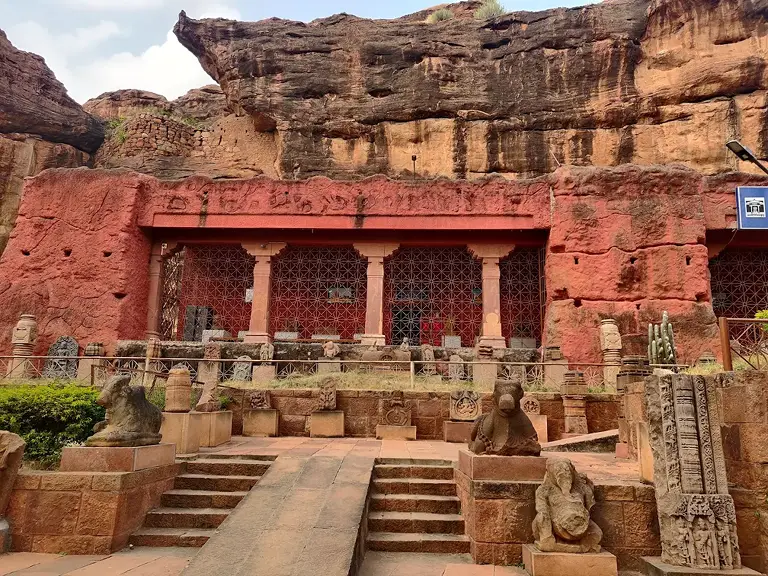
Archaeological Museum Badami
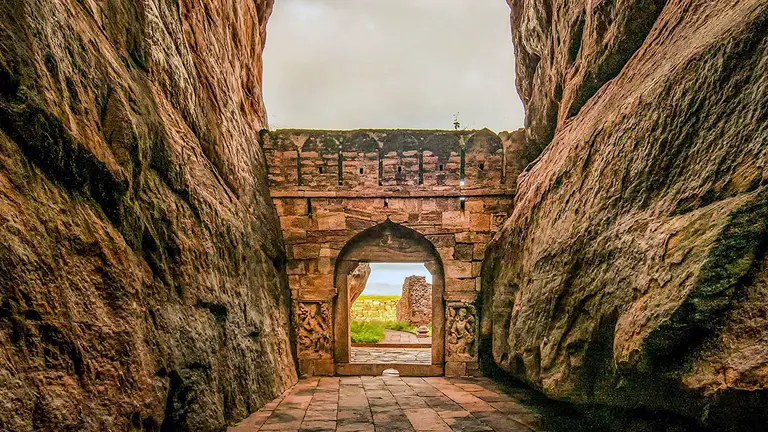
Badami Fort
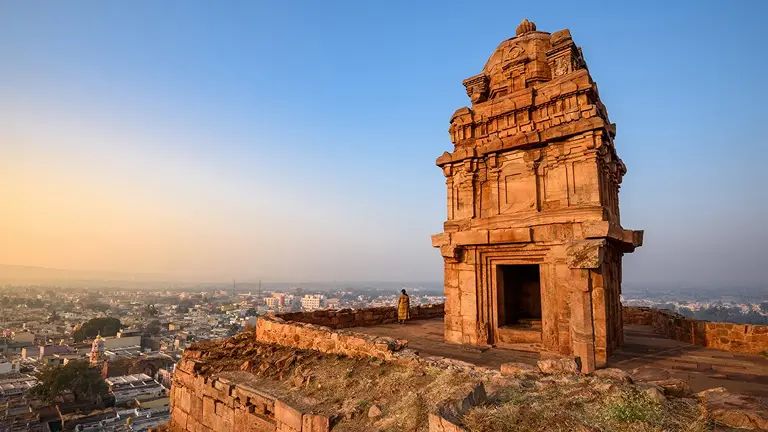
Lower Shivalaya
Badami sports three great Shivalayas which stand separate from other groups of temples. Malegitti Shivalaya is one of the most prominent ancient temples in Badami. Built in early Dravida style in the early 7th century by the great Badami Chalukyas. Containing all the elements of early dravida architecture and also represents many important deities on its walls. The rathas on the temple are interesting and display many elements to be incorporated later in Hindu temple architecture. The Upper Shivalaya has an ironic name since it is a Vaishnava temple. It has a closed and an open pradakshinapatha and its walls sport scenes from the Ramayana and also contains episodes from the Bhagavata Purana. Along with Krishna lifting Govardhana and Narasimha avatar, it is very rich in sculpture. The Lower Shivalaya is a much smaller temple with the mandapa entirely lost and also has an enclosed pradakshinapatha which is also lost. The garbha-griha is now empty though the pedestal inside is elliptical which is very rare. Yelamma temple is a structure of much later age built by the later or Kalyani Chalukyas and is built in vesara style, reminiscent of the temples found in the Gadag circuit. It is dedicated to a deity who is said to be the form of Parvati but also seen to be a local courtesan who was raised to the level of the goddess.
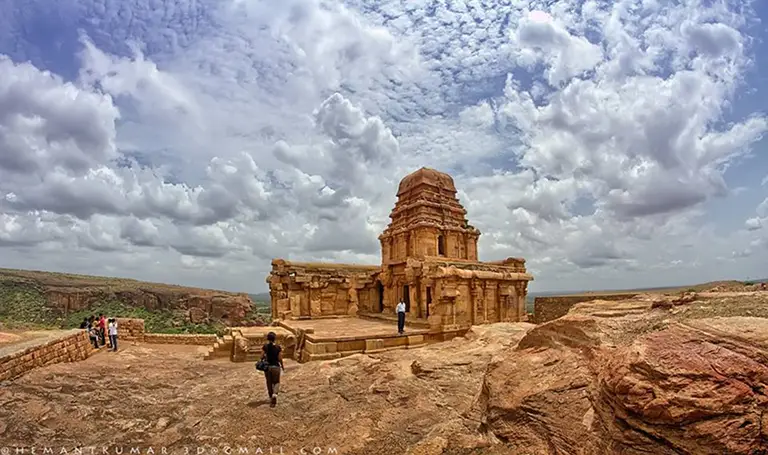
Upper Shivalaya
Badami sports three great Shivalayas which stand separate from other groups of temples. Malegitti Shivalaya is one of the most prominent ancient temples in Badami. Built in early Dravida style in the early 7th century by the great Badami Chalukyas. Containing all the elements of early dravida architecture and also represents many important deities on its walls. The rathas on the temple are interesting and display many elements to be incorporated later in Hindu temple architecture. The Upper Shivalaya has an ironic name since it is a Vaishnava temple. It has a closed and an open pradakshinapatha and its walls sport scenes from the Ramayana and also contains episodes from the Bhagavata Purana. Along with Krishna lifting Govardhana and Narasimha avatar, it is very rich in sculpture. The Lower Shivalaya is a much smaller temple with the mandapa entirely lost and also has an enclosed pradakshinapatha which is also lost. The garbha-griha is now empty though the pedestal inside is elliptical which is very rare. Yelamma temple is a structure of much later age built by the later or Kalyani Chalukyas and is built in vesara style, reminiscent of the temples found in the Gadag circuit. It is dedicated to a deity who is said to be the form of Parvati but also seen to be a local courtesan who was raised to the level of the goddess.
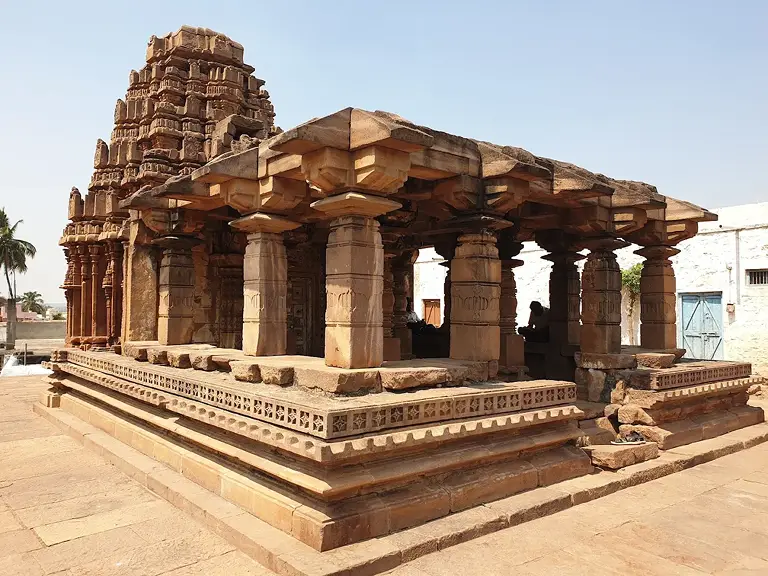
Yellama Gudi
Badami sports three great Shivalayas which stand separate from other groups of temples. Malegitti Shivalaya is one of the most prominent ancient temples in Badami. Built in early Dravida style in the early 7th century by the great Badami Chalukyas. Containing all the elements of early dravida architecture and also represents many important deities on its walls. The rathas on the temple are interesting and display many elements to be incorporated later in Hindu temple architecture. The Upper Shivalaya has an ironic name since it is a Vaishnava temple. It has a closed and an open pradakshinapatha and its walls sport scenes from the Ramayana and also contains episodes from the Bhagavata Purana. Along with Krishna lifting Govardhana and Narasimha avatar, it is very rich in sculpture. The Lower Shivalaya is a much smaller temple with the mandapa entirely lost and also has an enclosed pradakshinapatha which is also lost. The garbha-griha is now empty though the pedestal inside is elliptical which is very rare. Yelamma temple is a structure of much later age built by the later or Kalyani Chalukyas and is built in vesara style, reminiscent of the temples found in the Gadag circuit. It is dedicated to a deity who is said to be the form of Parvati but also seen to be a local courtesan who was raised to the level of the goddess.
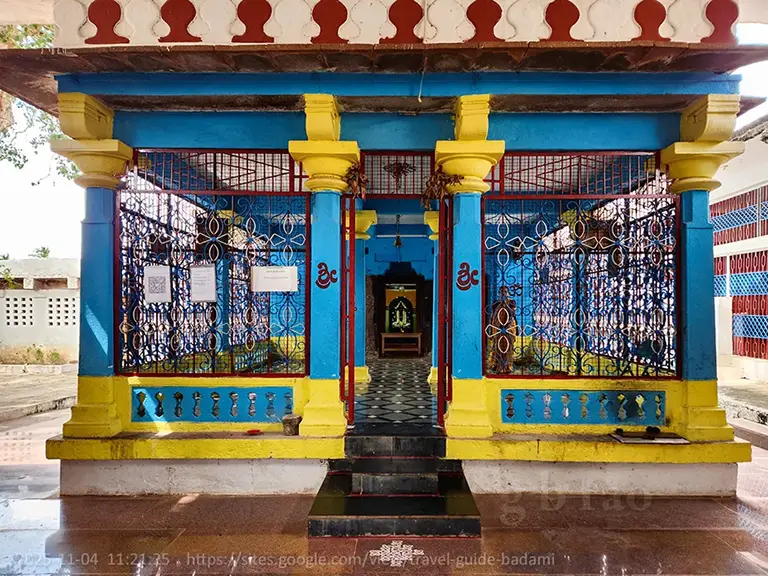
Dattatreya Temple
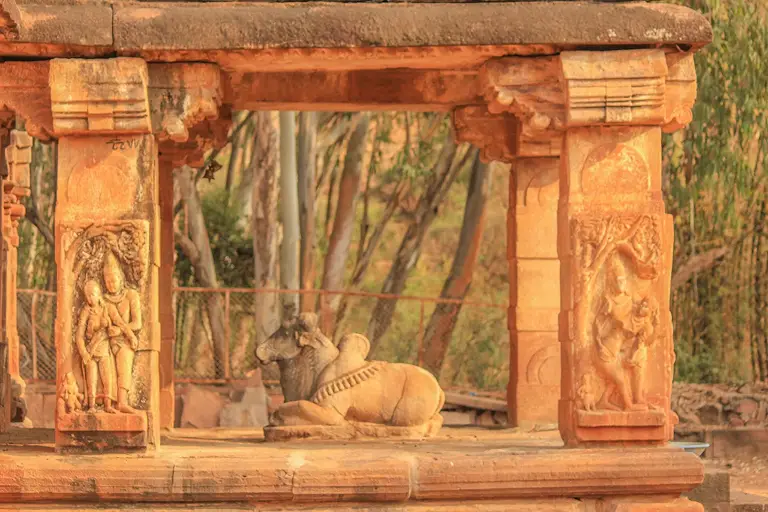
Naganatha Temple Complex
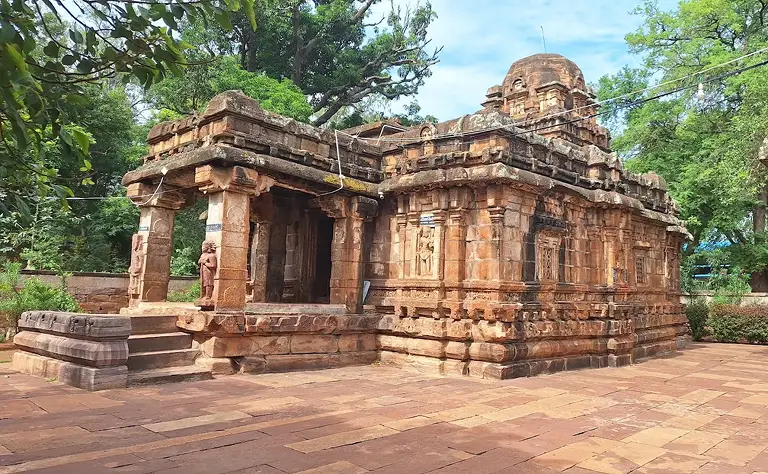
This temple complex has essentially one great temple which is emblematic of the early dravida style as seen in these parts of India. The temple is made in pure dravida style with a pyramidal tier roof rising over the garbhagriha. The mandapa is huge and closed with a sloping roof structure topped with stones in the shape of wooden beams indicating that early Hindu temple architecture in stone was copied from the wooden architecture. The temple also has an open mandapa which can also be called as the nandi mandapa but is in architectural continuation with the rest of the structure. Situated in a grove at a secluded corner of the district this temple is a great marvel of early Chalukyan architecture.
Mahakoota Temple Complex
One of the earliest structural temples of India, built towards the end of the sixth and the beginning of the seventh century, this temple complex is dedicated primarily to Lord Shiva. Built by the great Chalukyas this site also sports great early nagara temples along with dravida temples around a sacred pond. With the walls of the temples of two styles virtually indistinguishable and differences arising only in shikharas, this marks the beginning of the mixed (vesara) style of architecture in Karnataka. A natural stream is captured in the temple pond which is called the Papavinashaka Kunda, where it is believed that our sins are washed away. In the center of this pond is a panchmukhi Shivalinga. These temples are remarkable for their early design and beautiful sculpture and the fact that they are still functioning and are living structures.
Galganatha Temple
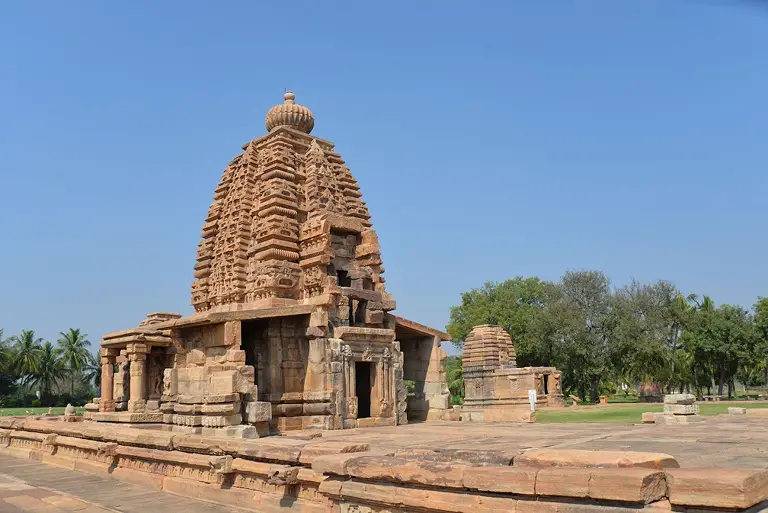
If one has to choose one cradle of temple architecture in all of India then it is Pattadakallu. Created in the early 7th and 8th centuries, by the great Badami Chalukya dynasty, it represents the next great stage in evolution of Hindu temple architecture. If Badami caves represent the earliest experiments of Hindus in cave temples, then Pattadakallu represents one of the earliest great experiments in structural temples. There are very few other sites in India where on one platform you can see as many temple styles and their evolution through ages as you can in Pattadakallu. Situated on the banks of the Malaprabha river, this used to be the place where the Badami Chalukya kings were consecrated. Galgantha represents a mature style of the same latina nagara style.
Kadhasiddheshvara Temple
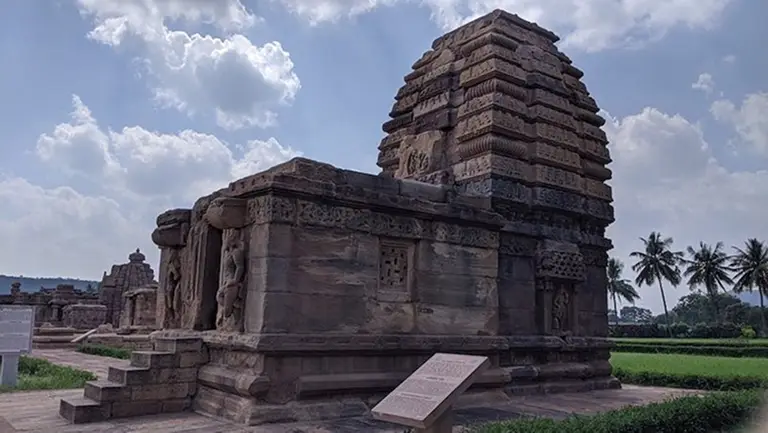
If one has to choose one cradle of temple architecture in all of India then it is Pattadakallu. Created in the early 7th and 8th centuries, by the great Badami Chalukya dynasty, it represents the next great stage in evolution of Hindu temple architecture. If Badami caves represent the earliest experiments of Hindus in cave temples, then Pattadakallu represents one of the earliest great experiments in structural temples. There are very few other sites in India where on one platform you can see as many temple styles and their evolution through ages as you can in Pattadakallu. Situated on the banks of the Malaprabha river, this used to be the place where the Badami Chalukya kings were consecrated. Kasiddheshwara is small but represents the earliest stages of latina nagara style of temples.
Jambulingeshvara Temple
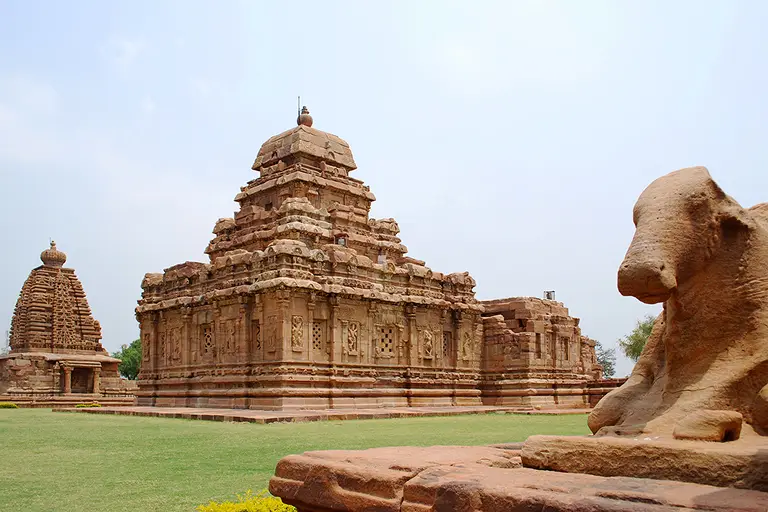
Sangameshvara Temple
If one has to choose one cradle of temple architecture in all of India then it is Pattadakallu. Created in the early 7th and 8th centuries, by the great Badami Chalukya dynasty, it represents the next great stage in evolution of Hindu temple architecture. If Badami caves represent the earliest experiments of Hindus in cave temples, then Pattadakallu represents one of the earliest great experiments in structural temples. There are very few other sites in India where on one platform you can see as many temple styles and their evolution through ages as you can in Pattadakallu. Situated on the banks of the Malaprabha river, this used to be the place where the Badami Chalukya kings were consecrated. Sangameshwara represents the period of early maturity of Dravida style shikhara where most of the elements of the style are in place.
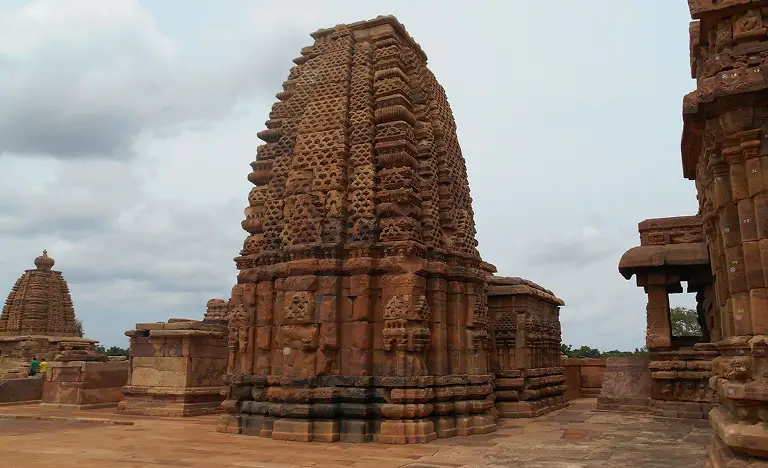
Kashi Vishvanatha Temple
If one has to choose one cradle of temple architecture in all of India then it is Pattadakallu. Created in the early 7th and 8th centuries, by the great Badami Chalukya dynasty, it represents the next great stage in evolution of Hindu temple architecture. If Badami caves represent the earliest experiments of Hindus in cave temples, then Pattadakallu represents one of the earliest great experiments in structural temples. There are very few other sites in India where on one platform you can see as many temple styles and their evolution through ages as you can in Pattadakallu. Situated on the banks of the Malaprabha river, this used to be the place where the Badami Chalukya kings were consecrated. Kashi Vishwanatha represents a mature style of the same latina nagara style.
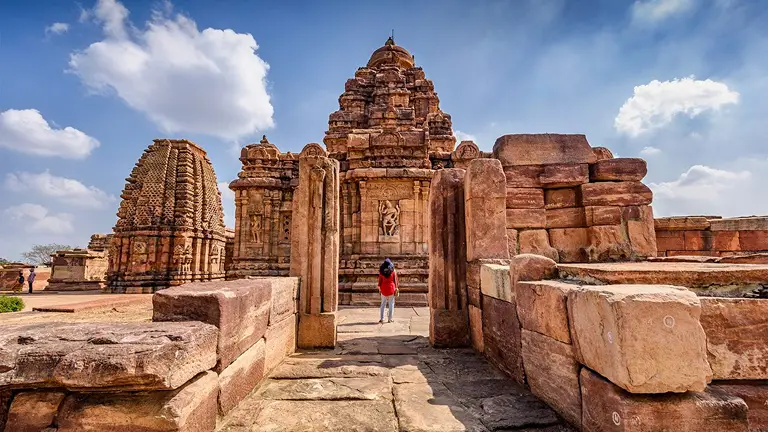
Pattadakallu Temple Complex
To witness the beginnings of both nagara and dravida architectural styles at one place is the most unique opportunity that Pattadakallu offers us. Not just this, the Papanatha temple here represent elements of both nagara and dravida architecture. The sculpture here is also significant and covers stories from the Ramayana, the Mahabharata, the Bhagavata Purana, the Harivamsa and even tales from the Panchatantra. It represents almost all major divinities in Hindu dharma. Sculpture here is more graceful, not overdone and exudes the grandeur of the art from the Maurya and the Gupta eras. Pattadakallu is a site where one can learn so much about the history and evolution of Hindu temple architecture and sculpture and that is why it is known as the cradle of Hindu temple architecture.
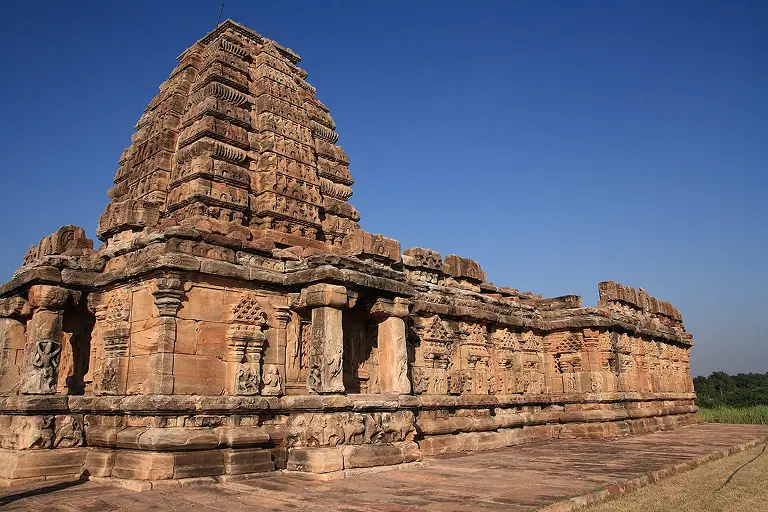
Papanatha Temple
The Papanatha temple represents elements of both nagara and dravida architecture. The sculpture here is also significant and covers stories from the Ramayana, the Mahabharata, the Bhagavata Purana, the Harivamsa and even tales from the Panchatantra. It represents almost all major divinities in Hindu dharma. Sculpture here is more graceful, not overdone and exudes the grandeur of the art from the Maurya and the Gupta eras. Pattadakallu is a site where one can learn so much about the history and evolution of Hindu temple architecture and sculpture and that is why it is known as the cradle of Hindu temple architecture.
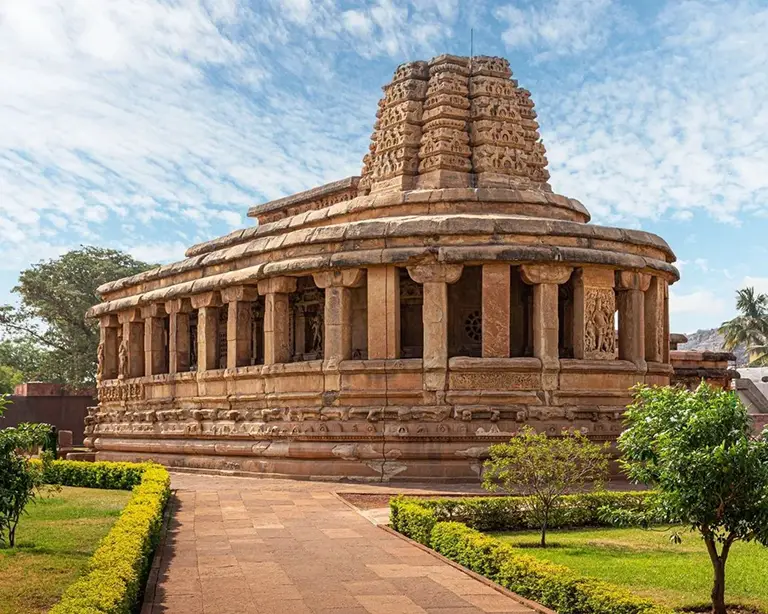
Durga Temple, Aihole
Aihole is the largest laboratory of Hindu temples in whole of Karnataka and possibly one of the largest in all of India. At no other site, at one place do you find so many different stages of temple and temple architecture. If the entire region is the cradle of Hindu temple architecture, Aihole is the cradle of that cradle. From early seventh century to tenth century one can find here temples of every era in every form of evolution. Ravanphadi is one of the oldest Hindu cave temples in India and Durga temple is one of the oldest apsidal temples with an open cloistered pradakshinapatha with one of the most exquisite gallery of sculptures that can be seen in entire India with the vigraha of Mahishasuramardini and Narasimha one of the most beautiful to be found anywhere. The site has around 120 stone temples spread across the beautiful landscape of northern Karnataka. Out of this around 100 are dedicated to the Hindu deities, one to Buddhist and rest are the Jaina temples. Most of the Hindu deities like Shiva, Vishnu, Durga, Surya and Ganapati have temples here. It is a wonderful place to study the evolution of Hindu temple architecture.
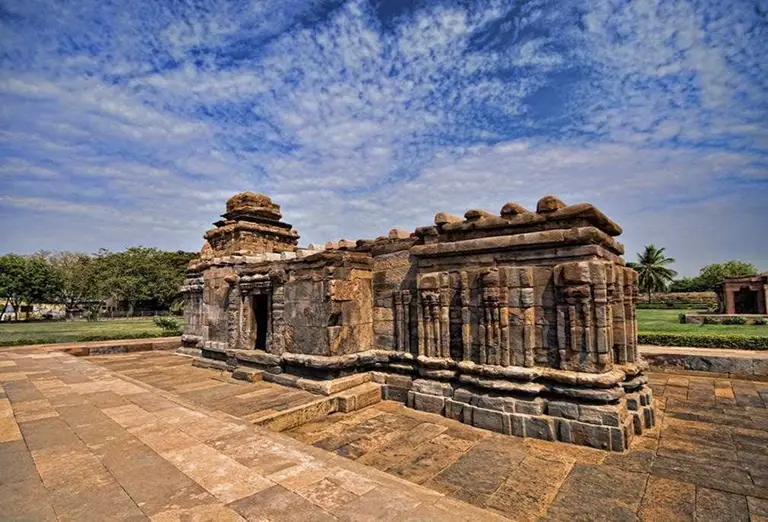
Suryanarayana Temple
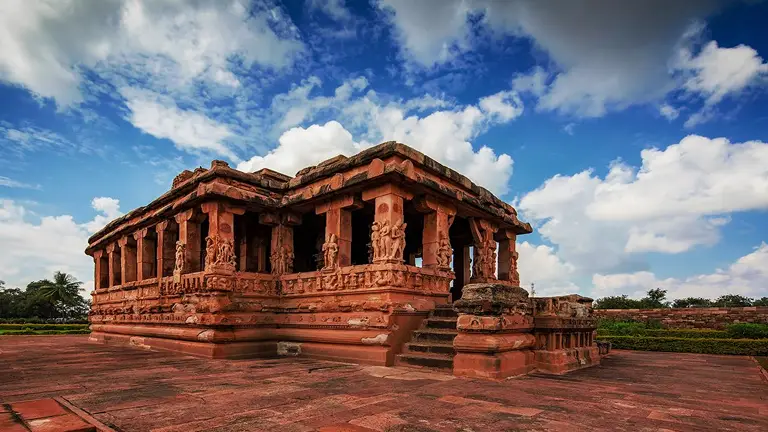
Shiva Temple
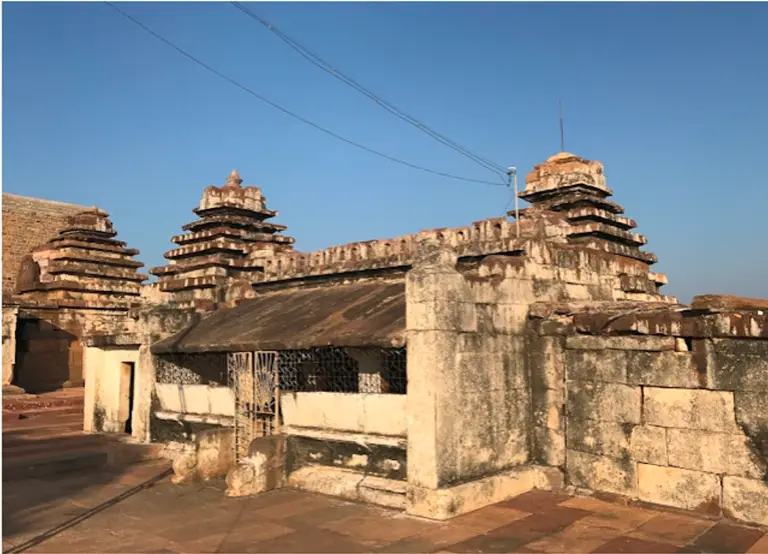
Ramalinga Temple Complex
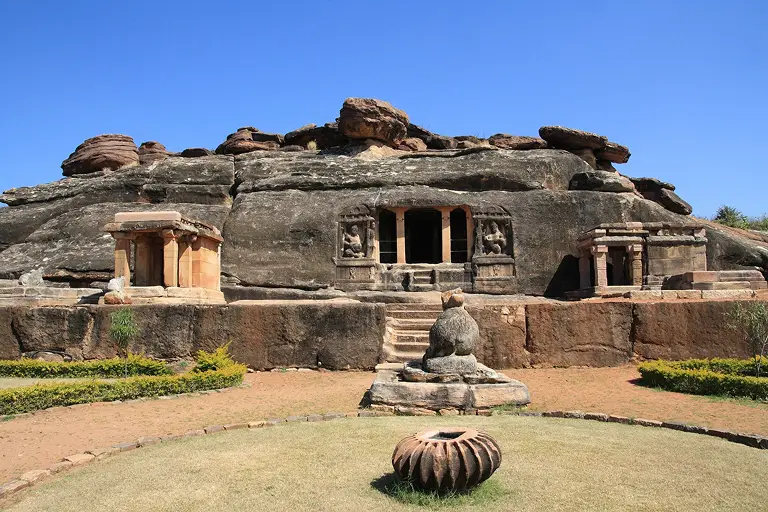
Ravan Phadi, Aihole
Aihole is the largest laboratory of Hindu temples in whole of Karnataka and possibly one of the largest in all of India. At no other site, at one place do you find so many different stages of temple and temple architecture. If the entire region is the cradle of Hindu temple architecture, Aihole is the cradle of that cradle. From early seventh century to tenth century one can find here temples of every era in every form of evolution. Ravanphadi is one of the oldest Hindu cave temples in India and Durga temple is one of the oldest apsidal temples with an open cloistered pradakshinapatha with one of the most exquisite gallery of sculptures that can be seen in entire India with the vigraha of Mahishasuramardini and Narasimha one of the most beautiful to be found anywhere. The site has around 120 stone temples spread across the beautiful landscape of northern Karnataka. Out of this around 100 are dedicated to the Hindu deities, one to Buddhist and rest are the Jaina temples. Most of the Hindu deities like Shiva, Vishnu, Durga, Surya and Ganapati have temples here. It is a wonderful place to study the evolution of Hindu temple architecture.
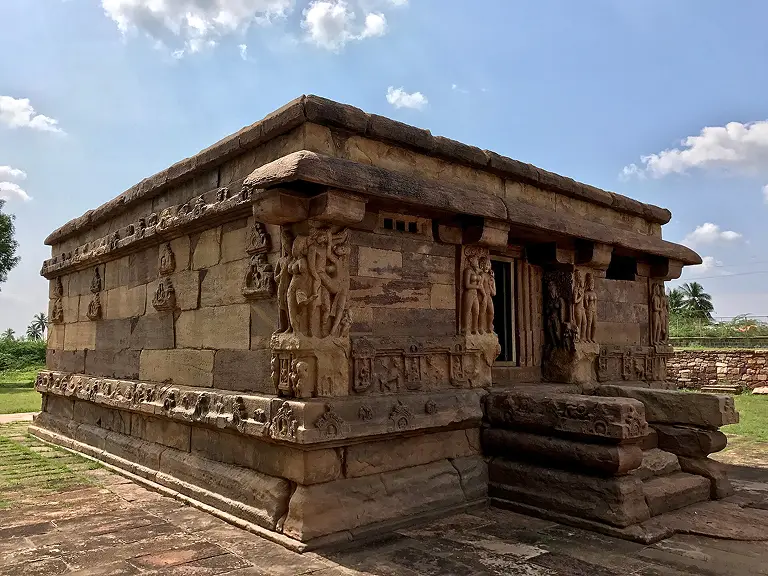
Huchiyappa Matha, Aihole
Aihole is the largest laboratory of Hindu temples in whole of Karnataka and possibly one of the largest in all of India. At no other site, at one place do you find so many different stages of temple and temple architecture. If the entire region is the cradle of Hindu temple architecture, Aihole is the cradle of that cradle. From early seventh century to tenth century one can find here temples of every era in every form of evolution. Ravanphadi is one of the oldest Hindu cave temples in India and Durga temple is one of the oldest apsidal temples with an open cloistered pradakshinapatha with one of the most exquisite gallery of sculptures that can be seen in entire India with the vigraha of Mahishasuramardini and Narasimha one of the most beautiful to be found anywhere. The site has around 120 stone temples spread across the beautiful landscape of northern Karnataka. Out of this around 100 are dedicated to the Hindu deities, one to Buddhist and rest are the Jaina temples. Most of the Hindu deities like Shiva, Vishnu, Durga, Surya and Ganapati have temples here. It is a wonderful place to study the evolution of Hindu temple architecture.
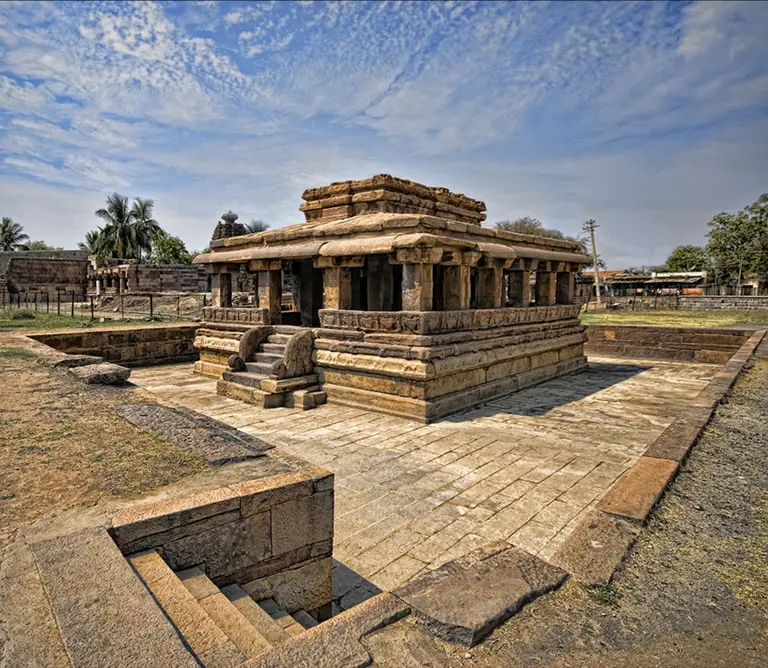
Huchiyappa Gudi, Aihole
Aihole is the largest laboratory of Hindu temples in whole of Karnataka and possibly one of the largest in all of India. At no other site, at one place do you find so many different stages of temple and temple architecture. If the entire region is the cradle of Hindu temple architecture, Aihole is the cradle of that cradle. From early seventh century to tenth century one can find here temples of every era in every form of evolution. Ravanphadi is one of the oldest Hindu cave temples in India and Durga temple is one of the oldest apsidal temples with an open cloistered pradakshinapatha with one of the most exquisite gallery of sculptures that can be seen in entire India with the vigraha of Mahishasuramardini and Narasimha one of the most beautiful to be found anywhere. The site has around 120 stone temples spread across the beautiful landscape of northern Karnataka. Out of this around 100 are dedicated to the Hindu deities, one to Buddhist and rest are the Jaina temples. Most of the Hindu deities like Shiva, Vishnu, Durga, Surya and Ganapati have temples here. It is a wonderful place to study the evolution of Hindu temple architecture.
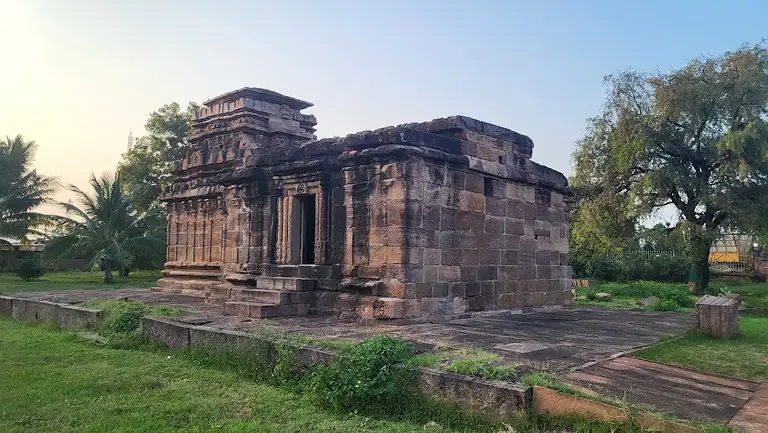
Ambigergudi, Aihole
Aihole is the largest laboratory of Hindu temples in whole of Karnataka and possibly one of the largest in all of India. At no other site, at one place do you find so many different stages of temple and temple architecture. If the entire region is the cradle of Hindu temple architecture, Aihole is the cradle of that cradle. From early seventh century to tenth century one can find here temples of every era in every form of evolution. Ravanphadi is one of the oldest Hindu cave temples in India and Durga temple is one of the oldest apsidal temples with an open cloistered pradakshinapatha with one of the most exquisite gallery of sculptures that can be seen in entire India with the vigraha of Mahishasuramardini and Narasimha one of the most beautiful to be found anywhere. The site has around 120 stone temples spread across the beautiful landscape of northern Karnataka. Out of this around 100 are dedicated to the Hindu deities, one to Buddhist and rest are the Jaina temples. Most of the Hindu deities like Shiva, Vishnu, Durga, Surya and Ganapati have temples here. It is a wonderful place to study the evolution of Hindu temple architecture.
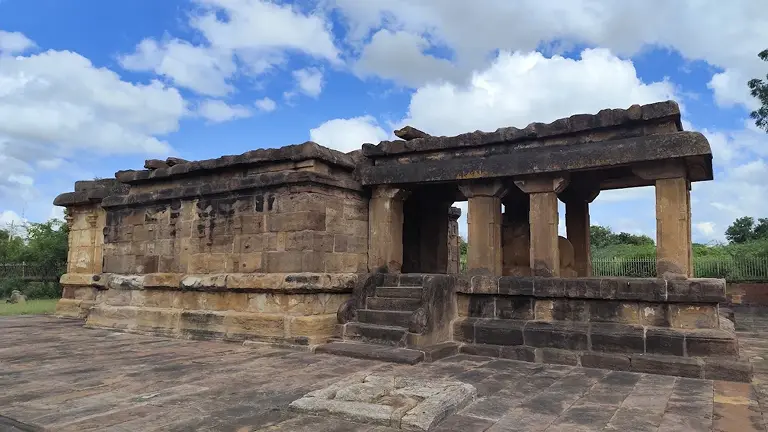
Jyotirlinga Complex, Aihole
Aihole is the largest laboratory of Hindu temples in whole of Karnataka and possibly one of the largest in all of India. At no other site, at one place do you find so many different stages of temple and temple architecture. If the entire region is the cradle of Hindu temple architecture, Aihole is the cradle of that cradle. From early seventh century to tenth century one can find here temples of every era in every form of evolution. Ravanphadi is one of the oldest Hindu cave temples in India and Durga temple is one of the oldest apsidal temples with an open cloistered pradakshinapatha with one of the most exquisite gallery of sculptures that can be seen in entire India with the vigraha of Mahishasuramardini and Narasimha one of the most beautiful to be found anywhere. The site has around 120 stone temples spread across the beautiful landscape of northern Karnataka. Out of this around 100 are dedicated to the Hindu deities, one to Buddhist and rest are the Jaina temples. Most of the Hindu deities like Shiva, Vishnu, Durga, Surya and Ganapati have temples here. It is a wonderful place to study the evolution of Hindu temple architecture.
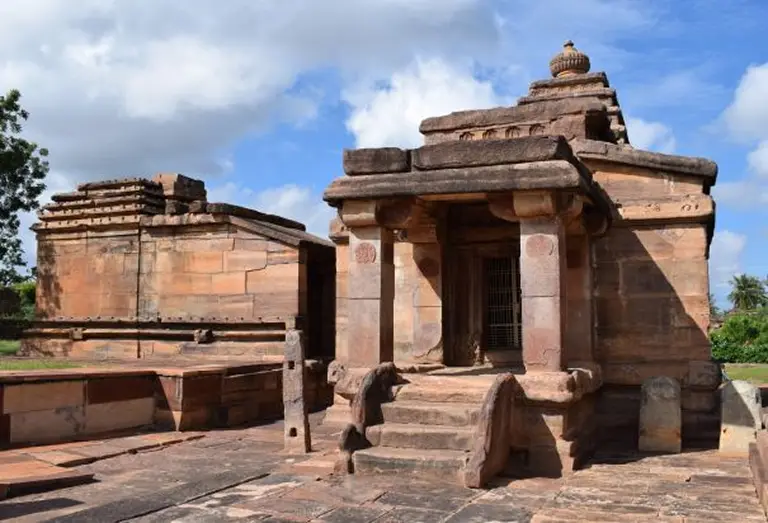
Mallikarjuna Temple Complex, Aihole
Aihole is the largest laboratory of Hindu temples in whole of Karnataka and possibly one of the largest in all of India. At no other site, at one place do you find so many different stages of temple and temple architecture. If the entire region is the cradle of Hindu temple architecture, Aihole is the cradle of that cradle. From early seventh century to tenth century one can find here temples of every era in every form of evolution. Ravanphadi is one of the oldest Hindu cave temples in India and Durga temple is one of the oldest apsidal temples with an open cloistered pradakshinapatha with one of the most exquisite gallery of sculptures that can be seen in entire India with the vigraha of Mahishasuramardini and Narasimha one of the most beautiful to be found anywhere. The site has around 120 stone temples spread across the beautiful landscape of northern Karnataka. Out of this around 100 are dedicated to the Hindu deities, one to Buddhist and rest are the Jaina temples. Most of the Hindu deities like Shiva, Vishnu, Durga, Surya and Ganapati have temples here. It is a wonderful place to study the evolution of Hindu temple architecture.
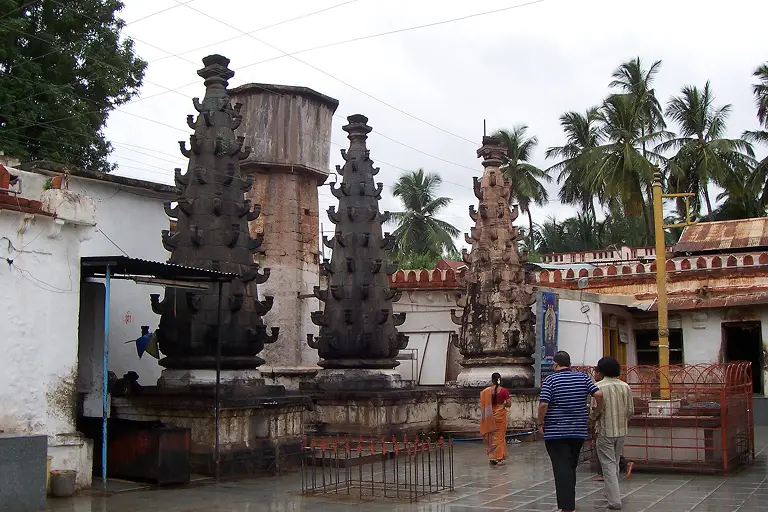
Shri Shakambhari Shakti Peetham, Banashankari
Dedicated to Shakabhari devi, a form of goddess Parvati, but who looks after food and nourishment, this temple located in a sacred grove is the center of great faith and tradition. Extremely popular in locals for its abilities to grant wishes, it is frequented by lakhs of people. The original temple was built in 7th century as it was the tutelary deity of the Badami Chalukyas but it was destroyed by Islamic invaders completely and so the current temple is a rebuilt one. But it refused to die as a sacred kshetra, showing the amazing resilience and continuity of Hindus and their tradition and remains a potent place of worship and remains the center of the dharmic and social life of the locals. The current temple was built by the Marathas. It shows how Hindus do not forget their sacred kshetras and how they rebuild.